
So, you’re wondering what horse tack you really need to get started and keep things running smoothly? It’s a question that pops up a lot, and honestly, the answer isn’t just a short list thrown at you in a catalog. It’s about function, comfort, and safety for both you and your horse. Think of tack as the tools of the equestrian trade – the better they fit and the more appropriate they are, the more enjoyable and effective your riding will be. We’re going to break down the absolute essentials, the things you’ll use day in and day out, and explain why they matter. No fluff, just the practical stuff you need to know.
When we talk about tack, the first thing that comes to mind is often what goes on the horse’s head. This is crucial for communication and control. Getting this right sets the stage for everything else.
The Bridle: Your Direct Line
The bridle is more than just a fancy leather strap. It’s how you communicate direction, speed, and halts to your horse. Choosing the right one isn’t just about looks; it’s about fit and function.
Types of Bridles and What They Mean
You’ll encounter a few main types, and understanding their purpose is key.
English Bridles: These are generally simpler and more versatile. They consist of the headstall, browband, cheekpieces, throatlatch, and have an attachment point for reins and a bit.
- A general-purpose English bridle is what most people start with. It’s suitable for a wide range of disciplines.
- A snaffle bridle is specifically designed to be used with a snaffle bit. This is the most common type for beginner and intermediate riders as snaffle bits are generally considered mild and forgiving.
- A double bridle involves two bits (a curb bit and a bradoon, which is a type of snaffle) and requires more advanced communication skills from the rider. You won’t need this when you’re starting out.
Western Bridles: These tend to be a bit more robust and often have a more decorative flair. They also typically don’t have a throatlatch, relying on the headstall and curb strap for stability.
- A curb bridle is the standard for Western riding and pairs with a curb bit. The shank of the curb bit provides leverage.
- A split-ear or one-ear bridle refers to the shape of the headstall over the horse’s ears. These are common in Western riding and are chosen more for rider preference and ease of handling.
The Importance of Proper Fit
A bridle that’s too tight will pinch and be uncomfortable, potentially causing sores. A bridle that’s too loose won’t stay in place and can slip, rendering it ineffective and unsafe.
- Cheekpieces: Should align with the horse’s eye.
- Browband: Should lie flat against the forehead, neither pulling the ears back too tightly nor being so loose it dangles.
- Throatlatch: Should be loose enough to fit two fingers comfortably between it and the horse’s throat.
- Noseband: The fit here depends on the type of noseband, but generally, it shouldn’t be so tight that you can’t slip a finger or two underneath. It’s there to help prevent the horse from opening its mouth to avoid the bit, not to completely shut it.
The Bit: The Mouthpiece of Communication
The bit is what the horse carries in its mouth and is the primary point of contact for steering and controlling speed. This can be a confusing area because there are so many options.
Snaffle Bits: The Start of Most Journeys
For most riders, a single-jointed or double-jointed snaffle bit is the go-to.
- Single-jointed snaffles: These have a single metal link in the middle. They can sometimes put pressure on the horse’s tongue, which some horses dislike.
- Double-jointed (or “mullen mouth”) snaffles: These have two links, often with a central ‘peanut’ or lozenge. They tend to offer a more even distribution of pressure and are generally considered more comfortable for most horses.
- Loose-ring snaffles: The rings are free to move, which many horses find more comfortable and less likely to pinch the corners of their mouths.
- Eggbutt snaffles: The rings are fixed to the mouthpiece. This prevents pinching and offers a slightly more stable feel.
Other Bits for Consideration (Later On)
While you’ll start with a snaffle, you might encounter other bits as you progress.
- Curb bits: These have shanks that create leverage. They are used in Western riding and with double bridles in English riding. They require a softer, more experienced hand.
- Pelham bits: A hybrid that combines features of a snaffle and a curb bit. Often used in eventing or show jumping.
Material Matters
Bits come in various materials. Stainless steel is common, durable, and easy to clean. Copper or copper alloys can be appealing to horses and encourage salivation, which can lead to a softer mouth.
For those interested in enhancing their horse care practices, a related article on effective stall watering methods can be found at Stall Watering for Horses: Proven Methods. This resource provides valuable insights into maintaining hydration for your horses, which is essential for their overall health and performance.
Keeping Them Comfortable: The Saddle and Accessories
The saddle is your seat, your connection to the horse, and how you apply your weight and leg aids. Comfort for both you and the horse is paramount here.
The Saddle: More Than Just a Seat
A well-fitting saddle is arguably the most critical piece of tack you’ll invest in. An ill-fitting saddle can cause pain, behavioral issues, and even long-term physical damage to the horse.
English Saddles: Versatility in Design
English saddles are generally lighter and designed for closer contact.
- All-purpose saddles: A great starting point. They offer a balance between jumping and flatwork.
- Jump saddles: Feature a flatter seat and forward-cut flaps to accommodate a rider’s jumping position.
- Dressage saddles: Designed with a deep seat and long, straight flaps for a more upright posture and close leg contact.
Western Saddles: Built for the Long Haul
Western saddles are heavier, with a horn on the front, and are built for comfort during long hours in the saddle and for tasks like roping.
The Crucial Fit Check
This is where professional help is often invaluable. A saddle fitter can assess your horse’s back shape and musculature, and your own riding conformation, to recommend the best fit.
- Saddle Tree: The internal frame of the saddle. It must complement the horse’s back shape. Too wide or too narrow, and it will pinch or bridge.
- Saddle Pads: These go between the saddle and the horse’s back. They help distribute weight, absorb shock, and prevent rubbing. They need to be the right thickness and shape to work with the saddle. A pad that’s too thick can make a well-fitting saddle feel too tight.
- Saddle Blanket vs. Saddle Pad: Often used interchangeably, but technically, a saddle blanket is a thicker, quilt-like layer, while a saddle pad is a thinner, more fitted piece.
Stirrups and Stirrup Leathers: Your Foothold
These are what you put your feet in to help with balance and aid transition.
Stirrup Leathers
These are the straps that attach the stirrups to the saddle. They need to be the right length for you and strong enough to withstand your weight.
- Material: Traditionally leather, but synthetic options are also available and can be easier to care for.
- Length Adjustment: You’ll adjust these based on your discipline and comfort. Jumper stirrups are typically shorter than dressage stirrups.
Stirrups
The ‘footrests’.
- English Stirrups: Come in various designs, often with a wider tread for better grip. Safety stirrups, which have a mechanism to release your foot in a fall, are a popular choice for less experienced riders.
- Western Stirrups: Generally larger and designed for riding with a heel.
Essential for Their Comfort and Care: Grooming and Protection
Beyond the basics of riding, you need equipment to keep your horse clean, healthy, and protected. This is about their well-being and ensuring they’re ready for work.
Grooming Tools: Keeping Them Clean and Happy
Grooming is more than just hygiene; it’s a vital bonding activity and a chance to check your horse over for any injuries or skin conditions.
Brushes and Curry Combs
- Curry Comb: A rubber or metal-toothed tool used in a circular motion to loosen dirt, mud, and hair. It’s usually used before a dandy brush.
- Dandy Brush: A stiff-bristled brush used to flick away the dirt loosened by the curry comb.
- Body Brush: A softer brush with finer bristles, used for sweeping away dust and applying a final shine.
- Mane and Tail Brush/Comb: For detangling and smoothing the mane and tail. A wide-toothed comb or a brush specifically designed for manes and tails is best to avoid breakage.
Hoof Pick
Absolutely essential. This tool is used to clean out mud, stones, and debris from the horse’s hooves. It’s crucial for preventing problems like thrush. You should pick out your horse’s feet before and after every ride.
Mane Pulling/Trimming Tools (Optional initially)
While not always an “essential” for a beginner’s kit, if your horse’s mane gets too long or unruly for your chosen discipline, you might need tools for pulling or trimming it. This is usually done for aesthetic reasons in English riding.
Protective Boots: Guarding Against Injury
Boots play a crucial role in protecting your horse’s legs from impact and injury, whether from brushing themselves or from external objects.
Types of Boots and When to Use Them
The type of boot you need depends heavily on the discipline and the horse’s individual needs.
Turnout Boots: These are generally used when the horse is turned out in the field. They can protect against bumps and scrapes from other horses or from the environment.
- Support Boots: Offer some degree of support for tendons and ligaments, particularly for horses that are prone to strain or if you’re riding in challenging terrain.
- Impact Protection Boots: Designed to absorb impact from knocks.
Exercise/Performance Boots: These are worn during ridden work.
- Brushing Boots: Designed to prevent the horse from “brushing” – a condition where one leg hits the opposite leg, often when the horse is tired or moving quickly.
- Splint Boots: Offer protection to the splint bone on the side of the cannon bone, which can be susceptible to injury.
- Overreach Boots: These are worn on the pastern and coronet band to protect the hoof and heel bulb from being struck by the hind shoe (overreaching). Essential if your horse is prone to this, especially in faster work.
Fit is Key
Just like any piece of tack, ill-fitting boots can cause more harm than good. They can rub, chafe, or restrict movement. Ensure they are snug but not tight, and check regularly for any signs of discomfort.
The Essentials for Handling and Safety: Halters, Leads, and More
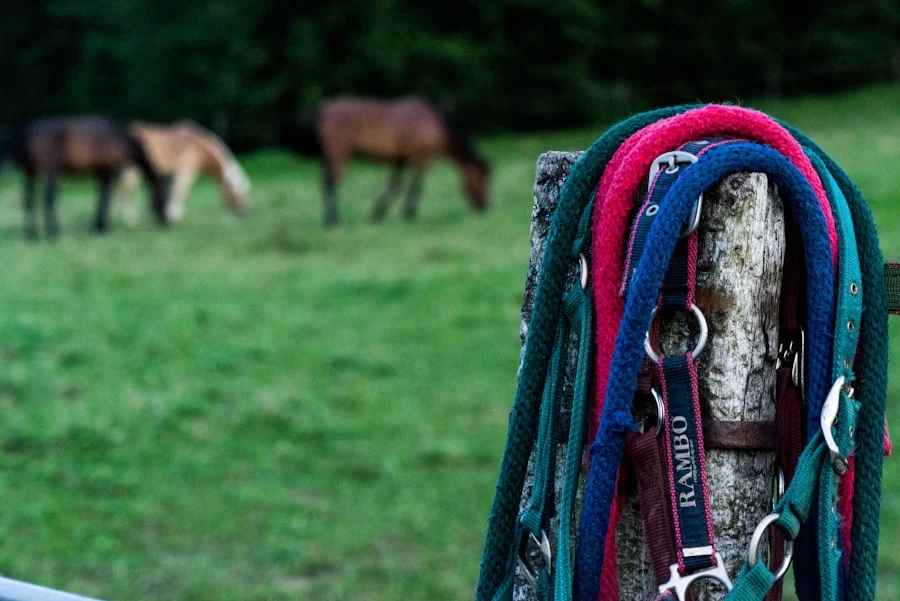
These are the items you’ll use every single day when interacting with your horse on the ground. They are about control, security, and moving your horse safely.
Halters: Your Everyday Grab
A halter is what you’ll use to lead your horse and secure them in their stall or when tied up.
Types of Halters
- Nylon Halters: Durable, easy to clean, and come in a vast array of colors. A good all-around choice for everyday use.
- Rope Halters: Often used in natural horsemanship training. They apply pressure to specific points on the horse’s face, offering a more direct communication without the use of metal hardware. Not ideal for beginners unless instructed by a trainer.
- Leather Halters: More traditional, can be very durable but require more care and can be expensive.
Fit and Fastenings
Ensure the halter fits snugly but not too tightly.
- Cheekpieces: Should lie flat against the horse’s face.
- Noseband: Should sit comfortably, not too high or too low.
- Throatlatch: Should be fastened loosely enough to fit two fingers underneath.
Lead Ropes: Guiding Your Partner
A lead rope is attached to the halter for leading your horse.
Material and Length
- Material: Usually made of nylon or cotton rope. Nylon is generally more durable and easier to clean.
- Length: A standard 6-7 foot lead rope is versatile for most situations. Longer ropes can be useful for groundwork but can be more difficult to manage if you’re not experienced.
- Snap Type: Choose a sturdy snap that won’t accidentally open. Brass or stainless steel snaps are generally preferred for their durability.
Lunging Equipment (As You Progress)
While not an immediate essential for every new rider, lunging equipment is useful for exercise, training, and fitness.
Lunge Line
A longer rope (typically 20-30 feet) used for exercising the horse in a circle.
- Material: Often braided nylon or polyester for durability and grip.
- Optional: Some have a hand loop or a swivel snap.
Lunge Whip
A long whip (usually 5-6 feet, sometimes longer with a lash) used to encourage forward movement and to convey directional cues. It’s used to “extend” your arm, not to hit the horse.
When it comes to ensuring your horse is well taken care of, understanding the right equipment is essential. For those interested in learning more about the best practices for horse care, you might find this article on top horse boarding stables particularly insightful. It not only highlights the importance of quality boarding but also touches on the necessary equipment that can enhance your horse’s well-being.
For Their Protection and Your Peace of Mind: First Aid and Care
| Equipment | Usage | Material |
|---|---|---|
| Saddle | To provide a seat for the rider | Leather |
| Bridle | To control the horse | Leather |
| Reins | To communicate with the horse | Leather or synthetic |
| Bit | To control the horse’s head | Metal |
| Saddle pad | To provide cushioning and protection | Various materials |
You can’t always prevent injuries, but you can be prepared. Having some basic first-aid supplies on hand can make a significant difference in an emergency.
The Horse First-Aid Kit: Be Prepared
This is non-negotiable for responsible horse ownership. Think of it as your emergency toolkit.
Essential Items to Have
- Antiseptic Wipes or Solution: For cleaning wounds. Betadine or chlorhexidine solutions are common choices.
- Gauze Pads and Rolls: For covering wounds and absorbing discharge.
- Gauze Tape: To hold bandages in place.
- Cotton Rolls/Padding: For creating soft, absorbent layers under bandages.
- Veterinary Thermometer: To check for fever.
- Saline Solution: For flushing eyes or wounds.
- Hoof Poultice: If your horse is prone to hoof issues or for treating abscesses.
- Tweezers: For removing splinters or debris.
- Scissors: For cutting bandages and tape.
- Gloves: For hygiene when treating wounds.
- Vet Wrap/Cohesive Bandage: Rolls of self-adhering bandage that holds dressings in place without sticking to the horse’s hair.
- Stethoscope: If you are at all comfortable using it, to listen to gut sounds.
- Fly Repellent and Sunscreen (Seasonal): To prevent irritation and sunburn.
- Emergency Contact Information: Your vet’s number, a local equine hospital, and any other emergency contacts.
Storing Your Kit
Keep your kit in a clean, dry, dark place. A dedicated tack trunk or a sturdy plastic container is ideal. Make sure it’s easily accessible.
Hoof Care Essentials
Beyond the hoof pick, consistent hoof care is vital.
- Hoof Oil/Conditioner: Applied occasionally to keep hooves supple and prevent cracking. Certain conditions might require specific types of hoof care products.
- Farrier’s Tools (Rarely your responsibility, but good to know): While you won’t be shoeing your horse, understanding what your farrier uses (rasps, nippers) can be informative. Your farrier will be your main point of contact for hoof health.
Fly Control
When flies are out, they can be a major nuisance and even transmit diseases.
- Fly Spray: A must-have during warmer months.
- Fly Masks and Sheets: Offer physical protection from flies, especially for horses that are sensitive or have eye conditions.
The Wrap-Up: Building Your Essentials Over Time
Figuring out what tack to buy can feel overwhelming at first, but remember, you don’t need everything all at once. Start with the absolute fundamentals for safety and communication, and build your collection as you and your horse progress.
Prioritize quality over quantity. A few well-made, properly fitting pieces of tack will serve you and your horse much better than a closet full of cheap, ill-fitting gear. And when in doubt, always seek advice from experienced riders, trainers, or a reputable tack shop. Your horse will thank you for it with a more comfortable and enjoyable partnership.